Saturday, February 28, 2015

Secret Life of Bees

Anna Rose Iverson
Arnold
Honors English
February 28, 2015


The Secret Life of Bees by Sue Monk Kidd is a coming of age novel set in 1964. The protagonist, Lily Owens, is a fourteen year old girl with no mother and a distant abusive father. She and her father live on a peach farm in a small town in South Carolina. Lily has no friends except her nanny, Rosaleen who is also a mother-like figure to her. Rosaleen soon gets arrested and subsequently beaten for standing up for herself to the town racists. This leads to Lily breaking Rosaleen out of jail and running away with her. Lily had a picture that once belonged to her mother. It was of a Black Mary with the name of a town written on the back. This is the town Rosaleen and Lily run to. There they find the Boatwright sister’s bee farm and their new home. The two soon became a part of the family, tending the bees, baking, and praying to ‘Our Lady In Chains’, a black Mary statue that is said to have once belonged to slaves and it would return back to them whenever the landowner tried to take it away. After living in the house for some time she discovers her mother had also spent time in the house, which caused Lily to feel unsettled. But this became worse when two tragedies strike the house in one day. After life goes back to normal Lily learns about her mothers relationship with August. Again just as life gets back to normal a visitor from Lily’s past comes to the house and tries to take her back. In the end the motherless girl gains not one but many new loving mothers around her, supporting her any way possible.
 I would suggest this book to anyone, it is a quick yet still emotional read. Being based in the sixties with prominently black characters, narrated by a young white girl shows the innocence of Lily surrounded by the racist world who judges her new family. The Secret Life of Bees shows that family isn't necessarily blood but those who love you and nothing can hinder that love, not even race, sex, marital status or anything else out of the so called norm.

Friday, February 27, 2015


Cole Bassett

Mrs. Arnold

College Prep

2/27/15
                                                                            
             The title of the book I read is The Cold War Beginners Guide by Merrilyn Thomas. The genre of this

book is Historical Non-Fiction and the Theme is to make it easier for some people to understand some of the

 things that happened during the Cold War. I didn't really have personal reactions because my reading face is 

pretty blank. To summerize I will give an example of a big conflict that happened at the tail end of World War 

II and in my opinion is one of the reason the Cold War happened. My example is when the allies were coming

 down on Berlin from the west and the Soviets from the east. If the Allies kept pushing they could have been in 

Berlin days before the Soviets. But General Dwight Eisenhower decided to let the Soviets have Berlin. One of 

the reasons he did this was he didn't want to start anything new with the Russians. This is one of the many 

examples in this book and a lot of it also has to do with Espionage. There is not one main character because 

the book goes all over the place with different people. I guess you could say Eisenhower would be my favorite 

because he was a great Five Start General. The Cold War went on for several decades and two powerhouse 

World Powers secretly fighting each other. To conclude for anyone who want to know more about the Cold War 

I would suggest this.


One Flew Over the Cuckoo's Nest (Tucker Diveley)

Tucker Diveley
Mrs. Arnold
English 10
25 February 2015
Independent Reading

       One Flew Over the Cuckoo's Nest by Ken Kesey is a Literary Fiction novel with Insanity and Society trying to destroy natures natural impulses. This book was a great read and I personally enjoyed the story's way of putting the protagonist as someone who is not some mighty hero or big shot, but rather a simple patient in a metal institute. I always felt compelled to read more and it made me think about how mental patients are being treated in this day and age. The book  was about this man named Chief Bromden, a patient in the institute for 10 years, he is keeping himself low key by pretending he is dumb and deaf. All the patients in the hospital are male and the tyrannical head of the asylum is Nurse Ratched. She is a former army nurse and keeps the patients in check by electroshock therapy and sometimes lobotomy. A new man arrives at the institute, Randle McMurphy, he is not like any of the other patients and like to gamble and has a zest for women. After a while in the Institute he learns that Nurse Ratched is a crazy women and is told there is no defying her. So he makes a bet that he can make her snap within a week. After, McMurphy is renowned as the leader of the patients and rally's them against Nurse Ratched and the fight begins. I loved McMurphy in this book because he has this air of confidence to him and is a truly good friend toward the other patients. On the other hand, Nurse Ratched, was my least favorite character because she did such inhumane things to the patients and had them fight each other so they would be more submissive. The writing style, I think, is very thoughtful because of Ken Kesey's idea to make a man who cannot speak and just observes thoughtfully is a interesting decision. As for the dialogue he lets the characters go wild, hoot and holler. McMurphy's speech tells us a good amount about his character, his intelligence, approach to life, and his communication with the patients. The book takes place in the late 1950s when stricter rules had not been placed in mental asylums. Here is a quote from the book in which McMurphy represents the 1950s and the current culture he is in, "Hell’s bells, listen at you,” McMurphy says. “All I hear is gripe, gripe, gripe. About the nurse or the staff or the hospital. Scanlon wants to bomb the whole outfit. Sefelt blames the drugs. Frederickson blames his family trouble. Well, you’re all just passing the buck.”(Kesey 153). The book is fantastic and I highly recommend reading it if you like physiological books and rebellion.

http://en.wikipedia.org/wiki/One_Flew_Over_the_Cuckoo%27s_Nest_%28novel%29

https://www.youtube.com/watch?v=2WSyJgydTsA

Why We Broke Up


Why We Broke Up, written by Daniel Handler, is your typical Young Adult novel. Ed and Min have an, all too familiar, breakup. They are also a case of opposites attracting with Ed Slaterton being co-captain of the Hellman High varsity basketball team and Min being the weird, Artsy girl that she is. The story of their break-up consist of: two bottle caps, a movie ticket from Greta in the wild, a note, a box of matches, your protractor, Joan’s book, stolen sugar, a toy truck, earrings, a comb, a best friend, a mischievous ex-girlfriend and a simple cardboard box. These objects take the reader deep inside the love story that was Ed and Min’s heartbreaking break up. In retrospect, Why We Broke Up is a novel directed toward a female audience, hence the fact that it is written from a female’s perspective. Although, I must say I enjoyed the way the story was told in a series of flashbacks written in a letter. I enjoyed parts of Why We Broke Up, but as a whole it was easy to lose interest from time to time.  I would recommend, Why We Broke Up, to young adults whom are struggling with their own love story. In closing, Why We Broke Up was not the best choice of novel for me. Although, I think the book had both low and high points, like most novels do. This novel has a very select audience, in which I did not fit. 

Alvaro Lizan English 10 Mrs. Arnold


I chose Fahrenheit 451 by Ray Bradbury as my book for my independent reading. It is a dystopian fiction book, and the overall theme is the fight between approval and censorship of reading books or expanding one’s knowledge in this fictitious future.

This book made me hesitate and think about this future without books and a complete control of everyone’s mind by TVs and TV shows and the power of commercials to manipulate people, which is not really different from the actual society. Mildred is the best example of control that TVs have in society in the book. And the novel, as I said,can be sort of realistic if we compare the effect or dependence of internet or smartphones on people  in the real society or even the high consummation of TV and the power of commercials.
Another issue in the book which is actually an increasingly problem in our world as well, is the pollution and the destruction of nature.
However, all these problems are way more harmful in the novel that in the actual world, so the writer warns us in some way against falling further in the hole and trying to prevent those issues.
I also think that the reason for the name of the novel (Fahrenheit 451) is pretty interesting. 451 is the number that Montag, the protagonist, wears on his fireman helmet when he is working or specifically, burning books,  and it is also the temperature ( in Fahrenheit) at which paper burns.

The novel is about a future where reading books is the most forbidden thing and firemen start fires to burn books down and the houses of their owners rather than extinguish them. People in this society don’t like having nice conversations with other people, or doing activities in the outside… they are consumed by TVs, they drive really fast and recklessly and there is a lot of pollution. One day, the protagonist of the book, Montag, who is also one of these firemen, meets a seventeen-years old girl who claims to be “crazy”. She and her unusual questions make Montag think about all the books and the situation of the society and finally he realizes how the government controls people’s mind. At the end, he decides to meet his old friend Professor Faber and try to make books come back, but his boss from Montag’s fire department tries to stop him in his fight for independent freedom.

I really liked the protagonist as a professional and a leader, because of his character to make the world change and his professionalism at work time.
I didn’t like his wife as a character though, because her TV wall was everything she cared about and she was also such a depressed and Alexithymic (difficulty in expressing feelings and dysfunction in emotional awareness) woman consumed by sadness and who tries to commit suicide. At the end of the book she calls the alert  to burn her house and runs away from Montag afterwards, expressing no emotional attachment to his husband.

The author’s writing style is interesting, sometimes he does not fully explain what is going on and that makes the story a little bit confusing even though he describes everything perfectly detailed.
He also makes the reader connect with the protagonist. I like Bradbury’s style, however, I think that the plot of the story is such a good idea and it is what makes it unique. So I think that the plot is better rather than the way it’s told.

The novel was set in an American city in sometime in the twenty-fourth century and there have been two atomic wars since 1990.

Fahrenheit 451 is such a good book to concern people about the future that awaits for us and I would totally recommend it.

Multimedia:
https://www.youtube.com/watch?v=FL_y6gtxLvQ

Kite Runner Blog Post

Cory Brumagin

Mrs. Arnold

English 10

27 February 2015

Kite Runner Blog Post

       Kite Runner, by Khaled Hosseini, is an eye opening historical fiction story of a young boy from Afghanistan who grows up in a time of conflict and strife. The story begins in Afghanistan in the mid 1900's. Other settings include Pakistan and Fremont, California. Kite Runner begins with the main character, Amir, reflecting on the events that occurred 26 years ago. Amir and his father Baba were extremely wealthy and had two servants, Ali and his son Hassan. Ali and Hassan were Hazaras, which meant that they were politically and socially inferior to the other ethnic groups. However since Amir and Hassan were the same age they grew up together and were able to forge a friendship since at the time they were both too young to be extremely discriminatory. Amir and Hassan were constantly picked on, but Hassan would stand up for both of them and drive the harassers off. One day during the flying kite festival a terrible event occurs that will change the lives of Amir and Hassan drastically. After Amir wins the kite battle competition Hassan offers to run his kite for him. Hassan runs after the kite, but does not return for a while. Amir is troubled by how long it is taking Hassan to return so he sets out after him. He finds Hassan in an alleyway surrounded by three of the boys who have constantly bullied Hassan and Amir. Amir sees Hassan being raped by the boys, but does nothing, and return to the festival as if nothing happens. After the incident Amir continues to act normal, and does not tell Hassan that he saw what happens. Over time a rift forms between the two boys, and Amir and Baba leave Afghanistan. They move to Fremont, California where they encounter somebody that they knew from Afghanistan, General Taheri. After receiving consent from the general Amir marries his daughter. However their joy is shortly lived because Baba dies a month after the wedding. Time passes and life continues on until one day a family friend named Rahim Khan contacts Amir and tells him that he must return to Afghanistan, which has turned into a war zone due to the control of the Taliban, in order to bring Hassans only son, Sohrab, to a safe orphanage. In order to find out if Amir is able to safely save his long lost best friends son and discover what happens to Hassan you will have to read the book. Although the book is historical fiction it was still able to make me see how unfair and horrible the middle east can be. I have heard many stories of brutal treatment and punishment in Afghanistan before, but hearing the story from the perspective of a child helped me understand how somebody who lived there would view the events that were going on. The only character that I really liked was Sohrab. In a way Sohrab reminds me of Maya from the book Karma, since they both stop speaking after traumatic experiences occur. I like Sohrab because he stands up to the Taliban officials who were beating the adult that was trying to save him. The book contained a plethora of events, but the author was able to smoothly string them together by using the narrative of a child, who was able to keep them simple, optimistic, and light hearted. The theme in this book is the search for redemption. Early on Amir strives to redeem himself to Baba, since Baba's beloved wife died as a result of giving birth to Amir. Amir believes that in order to redeem himself to Baba he must win the kite flying competition, and bring Baba the kite after he wins. This leads to the second instance of the theme: Amir feels guilty for what happened to Hassan, which drives him to return back to Afghanistan in order to save Hassan's son. At first I thought that I was not going to like this book, but as I read it I began to like it more and more. I liked it because it seemed like a very plausible plot, which made the story feel real to me. I would recommend this book to literally any mature reader who is able to handle death, abuse, and rape as a subject in a book. Even though those are some very serious topics, I believe that this book is not only something that the reader can learn from, but a page turning novel as well. 

http://khaledhosseini.com/ - Authors Website

http://www.amazon.com/The-Kite-Runner-Khalid-Abdalla/dp/B0012OX7EO - Kite Runner Movie

https://www.youtube.com/watch?v=sfeNUaKxufA - Video about actual Kite Running


Thursday, February 26, 2015

Christopher Koerner
Mrs. Arnold
English 10
25 February 15
Unbroken
by: Laura Hillenbrand

For my independent reading book I picked Unbroken, a nonfiction account of pilot Louie Zamperini in WWII, to listen to. The story is one that not only reflects Louise's personal writing during the war, but also his early childhood in which he is transformed from a juvenile delinquent to an Olympian runner. His passion for running from the law and his brothers influence quickly turned him into an athletic runner, beating all of his high school's track records. He went on to become one of the runners in the 1936 Olympic Games in Berlin or at the time Nazi Germany. It was there he hope to accomplish breaking the four minute mile. Louie’s perspective of Germany was interesting and shined a light on the Nazi oppression that was obvious all around. He points out all of the jewish stores being covered up or hidden on tours of Berlin, as well as during a ceremony a German woman refusing to hiel to Hitler, but at the same time terrified to death of being caught by the Gestapo. After the Olympics, Louie returned to the states and immediately enlists in the army. He was put in the air force as a bombardier, and due to the necessity for pilots and crewmen he and his squadron were sent from training early. They arrived in Hawaii and were assigned to a bomber. They named the metal fortress Superman and began going out on recon and bombing missions. In one mission Louie and his crew went out to bomb a small group of Islands of the coast of Japan, It was on this mission that their group became separated and they had to take on 9 Japanese Zeros. They miraculously made it out downing every plane, but at the cost of two of their crew mates and over 500 bullets from the Zeros into Superman. Even with this amazing encounter it is still not the greatest of his war time. Shortly after being assigned to a new squadron and a new plane Louie is sent out on a rescue mission for a lost bomber. When they found nothing the crew began to return but realized their plane was out of fuel and wouldn't make it back.
I will leave it off at that in hopes that you will read it. In my opinion I enjoyed it greatly especially the way the story was told. Unbroken mixed personal writing from Louie as well as historical references from World War 2. The description was vivid yet quickly put, and I never felt like the story was dragging on. I enjoyed that the book didn't focus on one event but Louie’s entire life. It made me more attached to the main character and created a bond that kept me listening (audio book) for the next part of the story. I recommend this book if you can take a good survival/war story and I think anyone can and should read this great book!

Authors Website/Book Info: http://laurahillenbrandbooks.com/

Taylor Walker
Mrs. Arnold
English 10
25 February 2015

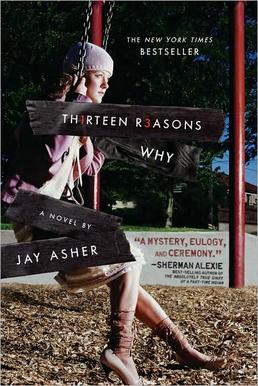
                                                               Thirteen Reasons Why

 For my independent reading, I read the book Thirteen Reasons Why by Jay Asher.  This is a young-adult fictional novel taken place in a small town, Crestmont talking about a young teenage girl, named Hannah Baker taking her own life.  They’re many different themes in this book including guilt, blame, death, and betrayal from different people.  When I was reading this book I thought to myself that I should be more careful when it comes to what I say and my actions to any person, because I may not know what they could be going through. I cannot imagine what Hannah Baker was going through and would not want to be in her situation. The book starts out by one of the main characters, Clay Jensen coming home from school and realizing he has a random package on his doorstep.  He opens the package and sees that it is a shoe box containing seven different tapes recorded by Hannah Baker, his high school crush who has just committed suicide.  Among the tapes, Hannah also wrote a letter saying to pass the tapes on to each student to hear why she took her life.  As the tapes get passed around to each student, Hannah tells each one of them by displaying thirteen reasons how they played a great role in her death.  This book is very understandable, but at some parts the tone can be tricky to understand.  I would most defiantly recommend this book to anyone around our age.


Kellie Fonville
Mrs. Arnold
English 10
25 February 2015

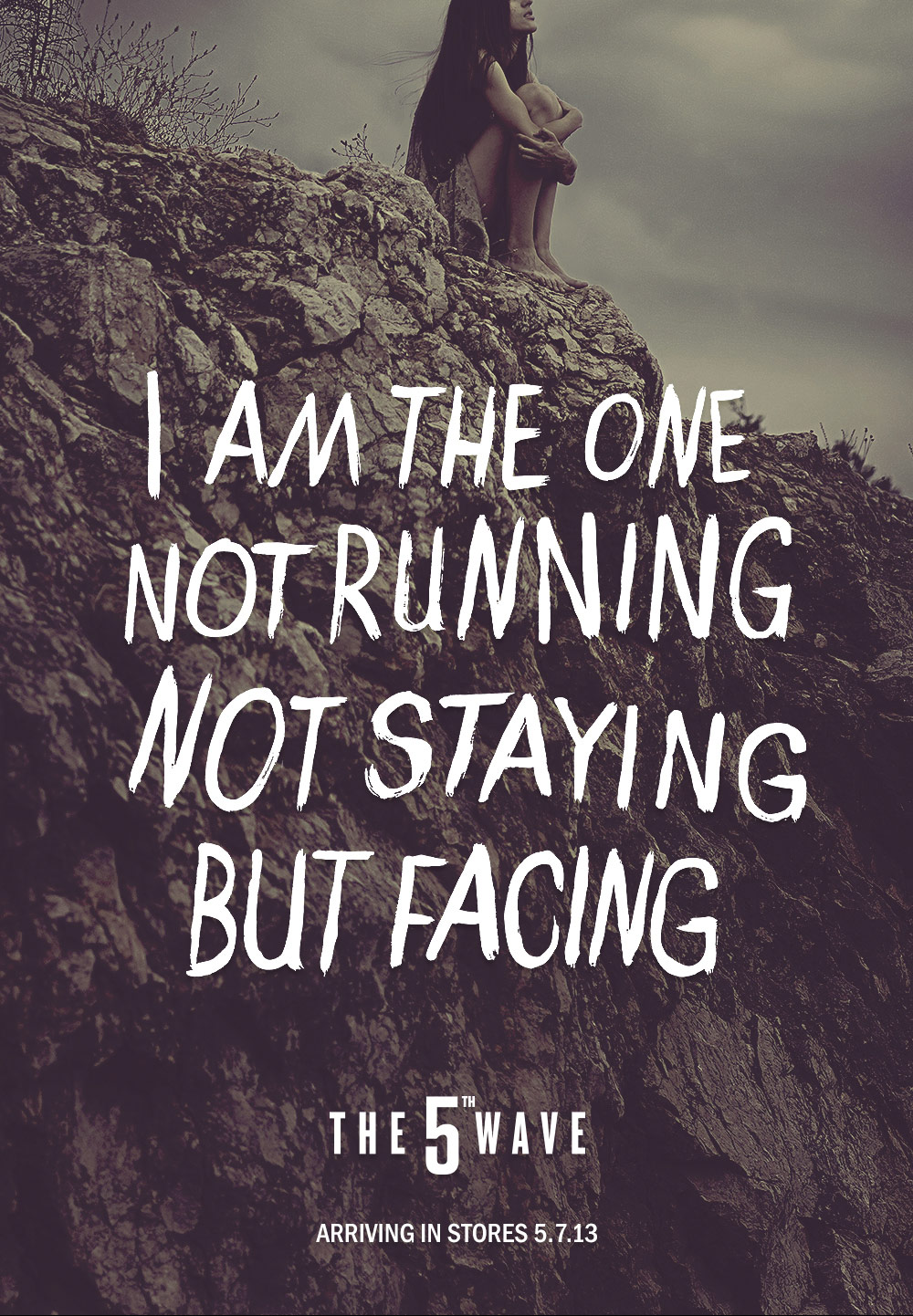
The 5th Wave
The 5th Wave is a novel by Rick Yancey written in 2013. The 5th Wave is a story about a 16 year old girl named Cassie Sullivan. The story takes place after an alien apocalypse takes place. Cassie is possibly one of the only humans left on Earth. Cassie learns that in this new world that you cant trust anyone, that it's every man for himself in the new apocalyptic world. A theme in this book is fear, survival, and trust. The reason I became interested in this book was because I enjoy action filled, and post apocalyptic stories. Also because I forgot my book one day and I found it sitting outside and began to read it. The story takes place in the edges of the city and in the woods. Cassie, the main character is the only person shes knows for sure is not an alien. Her goal is to find her little brother Sammy that had gotten lost in all the commotion of the first wave. She goes through multiple obstacles learning as she goes that this new world is dangerous. Cassie talks about how her old self would be disappointing in the things that she does now. The timing was set just after the first apocalypse after a few years later. Because its a pot- apocalyptic story there isn't a set time frame of when this story took place. I would recommend this book to any person who likes dystopian, action filled literature. The authors writing style is just normal. Leaving things in question, but using a lot of descriptive  words.  


When the Air Hits Your Brain

Mary Ann Neale
Mrs. Arnold
Honors English 10
26 February 2015
When the Air Hits Your Brain 

                I read When the Air Hits Your Brain, the true story of a young medical student's journey from his time in college and his rookie mistakes to the world class surgeries he performs as a high level neurosurgeon in a renowned hospital told and written by the surgeon himself, Frank Vertosick. The novel starts with Vertosick's overview and understanding of the field of neurosurgery as well as the process of moving from a medical student to a true doctor. He then begins his journey with his time as a college student and progresses into medical internship, residency, and chief of neurosurgery. Through each step of the way, he encounters strange and intriguing patients with new ailments that he learns from. For example, one of my favorite chapters is entitled "The Museum of Pain" after a record one of his patients kept of all of his surgeries and attempted recoveries. In the chapter, Vertosick places creatures into two groups: motionless food makers and migrating food foragers. The motionless creatures learn to obtain energy and food from their surroundings, such as plants use photosynthesis, while the foragers use mobility to find food. Mobil creatures also came up with the nervous system, which uses pain as a method of learning. Vertosick then goes on to explain the difference between pain and suffering and gives several examples of patients whose pain was psychiatric, not physical. Another portion of the novel I loved is his experiences with psychotic patients, specifically a patient he encounters who is schizophrenic. He recalls the behaviors and severe delusions of the patient and how he was treated. My favorite part of the novel was the amount of knowledge I obtained from reading it. Vertosick explained medications (how they are used and what effect they have on the body), mental diseases (what treatment is used and what exactly the disease effects), surgeries (why and what they do), and organ function (from how the brain works to extracting fluid from the spinal cavity).
              In my opinion, this book is definitely worth reading. It is not only informative but also very interesting. Although information on medicine and surgeries is included, the author also describes his experiences with his coworkers and patients. The reader is given the opportunity to experience all the patients, surgeons, and surgeries that Frank Vertosick encounters throughout his career.

Interview With Frank Vertosick
Karen Lane
Mrs. Arnold
English H. 10
February 26, 2015
Fight Club

Fight Club is a novel written in 1996 by Chuck Palahniuk. It is written in the point of view of the unnamed and unidentified main character. The book follows this guys quest for sleep. He is an insomniac who frequently attends testicular cancer support groups to understand the real meaning of suffering, later to cry, and thusly sleep. His ritualistic attendance at these groups is interrupted and his life changes soon after. The title, Fight Club, comes into play when he meets a friend at a bar, Tyler, and they start a fighting club to deal with the emotional trauma of their lives, replacing suffering with the release of anger. The novel has been described as a mental health satire, which seems appropriate, (guess you will have to read to find out). Maybe it was just me, but the ending of this book was pretty trippy. I was totally caught off guard and in the most impactful way. This is now one of my favorite books, definitely making my top 10 list and worth reading. Surprised myself with how much I enjoyed this one. So why did I like it so much? First, the imagery. For example, “Walter from Microsoft smiles his steam shovel jaw like a marketing tool tanned the color of barbeque potato chips” (Palahniuk 48). and, “The rain trickles down through the house, and everything wooden swells and shrinks..” (Palahniuk 57). It was beautifully written in my opinion, just the way I think and the way I want to write. Not to give too much away, the book was written with no filter and is not young adult literature! Finally! Cursing like real dialogue should, choppy sentences, descriptive language, modern references, and real life relationships (even touching on consumer capitalism) fill this book to the edges of its pages. Although the story is a little farther from reality, it brings the reader back down from ironic, stereotypical, predictable stories with a twist at the end that caught my little brain off-guard. Definitely worth reading if you’ve got two hours or so, and will even make you laugh.


Les Miserable - Alex Lee

For my independent reading project, I read Les Miserable by Victor Hugo. Les Miserable is a classic historical fiction novel. There are many themes in this book, such as forgiveness, sorrowful, courage, poverty, etc. I got interested in reading this because I know that the movie was really famous in 2012. Also, I read a children's book about Jean Valjean when I was young. Reading the original novel was a interesting approach of the same story. The story begins with Jean Valjean 20 years of slavery for stealing a bread for his nephew who was dying. During his parole, he stays in a church with a bishop. THe bishop fed him and provide him shelter to sleep when other did not. Jan Valjean stole the silver candlesticks in the church and he was caught. However the bishop forgive him by saying that he gave the silver candlesticks. This event enlightened him to live a new clean life through the name of god. The story continues with how he lives his changed life and who he meets. There are other important characters that he meets like inspector Javert Fantine, and Cosette. I loved how this book portrays a lot of themes that touches my heart and just drags me into the stories. There was one character that I did not like; not Javert, the Thenardiers in the Montfermeik who took care of young Cosette. I just don't like those kind of people. They are like leeches that they just don't want to leave. If I would comment about the writer's style, I was pretty comfortable about the expressing and how the story flow out. THe story of the book was too catchy that I was not bothered with expressions that are not familiar to me; English expressions. The time set was after the French Revolution and since it is a historical fiction, some parts of the stories were actually true. For example, the actual French Revolution, how people rebelled against the king, and the death of General Lamarque. I think I am sure that I would recommand this book to my friends or other people, not just because it is interesting, it is a different way of approaching to a historical event. I would also recommand people to see the movie too.


Wednesday, February 25, 2015

Sold by Patricia McCormick

Summer Owens
Mrs. Arnold
Honors English 10
26 February 2015
Sold
I read Sold by Patricia McCormick for my independent reading project. It is a fictional novel told in verse, set in Nepal and India. This is a book about a 13 year old girl named Lakshmi who lives in a rural mountain community in Nepal. Most of the homes in her community have a tin roof, which means the father and/or brother work very hard, but her family does not have a tin roof. Her father is dead, and she is left with her loving mother Ama, her baby brother, her best friend a goat named Tali, and her stepfather who strongly dislikes and disrespects her. There are many seasons where they live, and the rainy season has one of the worst effects on their family. Since they do not have a tin roof, they are constantly dealing with the struggles of the water leaking in through the roof. Her stepfather has wasted all their money gambling, and once they run out of things to sell, her stepfather sells her into the city. Although Lakshmi is heartbroken to leave her mother, brother, and goat, she knows it will help the family as a whole to make more money. Lakshmi thinks that she is going to work as a maid for a rich family in the city, but it turns out she is sold into human trafficking. She is dropped off at a place called the “happiness house.” There she meets many other girls who are trying to make money for their families as well, some even have young children they have given birth to while at the house, which makes their situation much more complicated. Mumtaz, the boss of the house, is a very mean lady who constantly threatens and tortures the girls. At first Lakshmi refuses to have sex with any of the men, but after a long time of her resistance, which included Mumtaz beating her and starving her, she is drugged every night and raped by the different men that come and go each night. Over her time staying there she learns about the TV(calls them the people in the glass box), and finds it very interesting, but sometimes annoying. She also meets a boy named Harish, she calls him the David Beckham boy, he is the son of another woman in the house. He goes to school everyday, and eventually teaches Lakshmi what he is learning, such as the languages of English, Hindi, etc. Lakshmi is also experiencing something with him she has not experienced in a long time, laughter. Sadly his mother is kicked out to the street, and he must go with her as well. This greatly depress Lakshmi. While in the house there are many raids done by the police and Americans who help them. As time progress Lakshmi realizes that there is more to life than this house, and the outside world is not as bad as Mumtaz makes it out to be. Over her time in the house she meets many men some of which happen to be American. These men encourage her to leave, but she hesitates to believe them, since she has big trusting issues. These are crucial factors in her decision of whether she will stay or go. One must read the book to find out if she goes with the Americans or if she stays in the “happiness” house.
There are many themes within the book, but two that I feel are most important are gender inequality and an abuse of power. Through out the book there are many gender equality issues, it starts with Lakshmi’s stepfather not working and forcing his wife and stepdaughter to do most of the work around their house, while he is wasting their money, and putting them in debt. Another example of gender inequality is the view of relationships between men and women. Women may not look a man in the eyes, women must bow to men, and a wife cannot eat until her husband has had his fill. There are also many examples of abuse of power. It starts with Lakshmi’s stepfather selling her to the city, to pay off debts that he made. Another abuse of power is Mumtaz, the owner of the happiness house, and the way she abuses the girls and uses the blackmail of their debt to force them to keep working and not run away.
Lakshmi was definitely my favorite character. When she first arrived at the house she resisted anyone who was trying to hurt her or help her, she even went without food for days while being locked in a room with windows on the bars. Eventually she realized that she would have to give in, because it would eventually help her family. She realized that her family's needs were greater than hers, and I greatly admire that about her. The stepfather was definitely my least favorite character. Most men in their village went into the city each day and found a job that made decent money, so they could support their family. Her stepfather had a severe arm injury as a child, and did not receive medical care in time, which now prohibits him from working. Instead he spends his time gambling away their money and forcing his wife and stepdaughter to do all of the work, and eventually sells Lakshmi into human trafficking to pay off his debts. Although he has an arm injury, I feel he should at least try to make better contributions to the family as a whole.
This book was written in verse, which I really enjoy. I feel it gives the book more of a flow and since most events in this book happen very fast, I feel it fits the book well. It also helps the book move much faster, and that makes reading a book much easier for me, since I am not a very fast reader. I enjoy reading many short poems for one chapter, rather than having a few long chapters. It is written in first person, which I really enjoy. This way I know exactly what is going through the narrator's head as the situation is occurring. I feel that I can connect and empathize with the characters much better this way, because it is as if I am in the book as well.
I would definitely recommend this book. Although the book was quite depressing, I believe that it spreads awareness for this problem of human trafficking, and hopefully the number of those involved will lower over the years. Other than sad human trafficking issues, I really enjoyed the book. I really enjoy books with a strong female character, and Lakshmi is definitely a woman strong in her beliefs. I think most people would enjoy this book, but I think teen girls would enjoy it the most. It is a great book also for people involved in human rights. Overall, I really enjoyed this book, although it was very sad at times, the message it promoted was much stronger than the sad themes.

Multimedia Links: